


Ascension: Deckbuilding Game
3.72.74K Reviews
App Specs
- Version
- 2.5.3
- Updated On
- License
- Free
- Downloads
- 500,000+
- Developer
- Playdek, Inc.
- Categories
- Card
- Platform
- Android
Screenshots

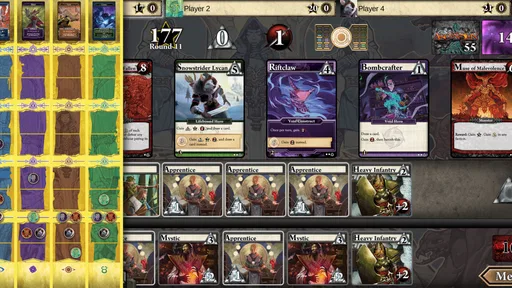
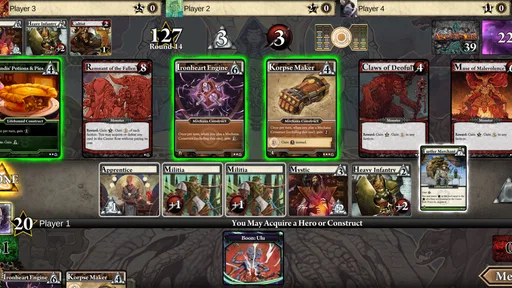
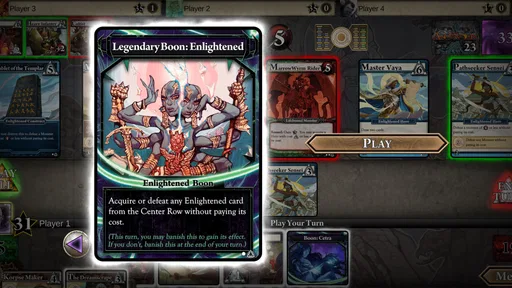
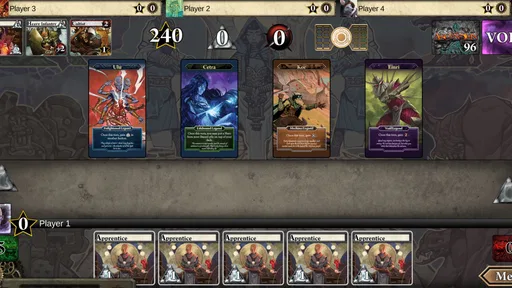
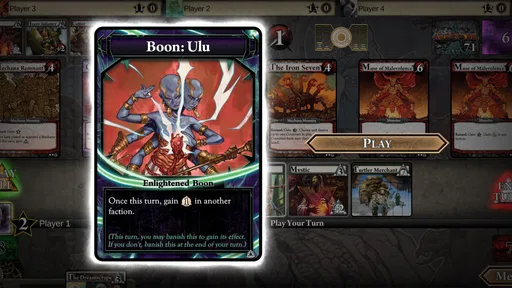

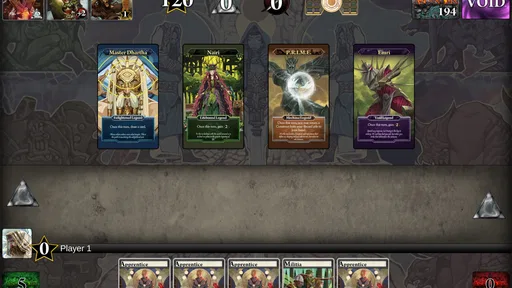
 Analysis by AppCompare
I approached Ascension: Deckbuilding Game expecting a quick card game I could learn between other tasks, but its real appeal became clearer after several sessions. It is a digital adaptation of a deckbuilding card game from Playdek, Inc., presented as a free download for players who enjoy building a stronger deck while making decisions under pressure. The basic idea is easy to grasp, yet the quality of each turn depends on how well I balance immediate rewards against the shape of my deck later.
That distinction matters because this is not simply a game about collecting the most impressive cards. The satisfying part is deciding when to improve the deck, when to take a less glamorous card for practical reasons, and when to stop chasing a plan that is no longer working. I found that the first sessions are welcoming, while the longer-term question is whether the card pool and available content keep those decisions interesting after the initial discovery period.
How Ascension feels during the first week
The first week is where the game makes its strongest impression. The rules are approachable enough for someone who already understands familiar card-game ideas, but the choices are meaningful from the beginning. I was rarely waiting for a complicated setup before making decisions. Instead, the game quickly puts attention on the cards available now and on the direction I want my deck to take.
That creates a pleasant rhythm for short play sessions. I can start a game without treating it like a major project, examine the current options, and make progress through a few focused turns. This makes it a good fit for a commute, a quiet break, or an evening when I want something more thoughtful than a passive time-filler but less demanding than a large strategy game.
The most useful early habit is to judge cards by how they support the whole deck rather than by their individual appeal. A powerful-looking card can be awkward if it does not work with the rest of the choices I am making. Conversely, a modest card may be valuable because it improves consistency. That lesson gives the opening sessions more depth than a simple “buy the strongest card” approach.
I also recommend resisting the urge to restart every time the opening market does not match a preferred strategy. Learning to adapt is part of the game’s appeal. The available cards can push me toward a different plan, and the better response is often to build around what is realistically accessible instead of waiting for an ideal sequence. This is one of the first places where the game feels like a genuine deckbuilding exercise rather than a collection of disconnected card effects.
The free entry point helps during this stage. I can try the core experience without paying upfront, which makes it easier to decide whether the turn-by-turn structure suits me. Optional purchases range from $0.99 to $9.99 per item, so I would approach the extra content deliberately rather than treating every addition as necessary on the first day.
Worth Reading Before You Choose

EA SPORTS FC Mobile 26 Is a Bigger Football Game, but It Takes Time

Flipboard Shows What News Apps Must Do Beyond the Feed

Switching to Android Auto Means Rethinking Your Driving Routine

Google Calendar Makes a Crowded Week Easier to Manage

Ludo King Makes the Most of the Minutes Between Plans

Baby Panda World Brings Quick Play to Modern Phones, but Its Game Library Feels Busy
For a new player, the main challenge is not learning the basic flow but understanding why a seemingly good purchase may damage future turns. A deck that becomes too large or unfocused can feel less reliable, even when it contains stronger individual cards. I found it useful to think in terms of efficiency: every card added should have a reason to appear in the deck, and every weak card eventually affects the quality of later draws.
The game’s Everyone age rating also makes it approachable for a broad audience, although the strategic decisions are better suited to people who enjoy planning than to players looking for a purely automatic card battler. It is not the sort of game I would recommend to someone who wants constant visual spectacle or a fast arcade pace. Its pleasure comes from evaluating options, not from overwhelming presentation.
What makes the opening sessions satisfying
The strongest early sensation is improvement. Even when a game does not go perfectly, I can usually identify a decision that taught me something about timing, deck balance, or the value of flexibility. That makes losses more useful than they might be in a luck-driven card game. I am not simply hoping for a better draw; I am gradually learning how to create better draws.
A practical approach is to decide on a broad direction early, then keep it loose. I might favor a strategy that rewards a certain type of card, but I avoid forcing every later choice to fit that idea. This prevents a common beginner mistake: spending too much effort protecting a plan that the available cards no longer support.
Another helpful tip is to watch the deck as a cycle rather than focusing only on the current hand. A card that looks weak in isolation may become useful when it appears reliably, while a flashy card that rarely reaches the hand may not justify its place. Thinking about the next few turns makes the game feel less random and gives me more control over its pace.
That first-week learning curve is gentle without being empty. I can understand the basics quickly, but I still have reasons to replay a match because the same broad plan can behave differently depending on the sequence of available cards. This is the point at which the game earns attention. The harder test is whether that attention survives once the basic discoveries are over.
What remains valuable from month to month
After the novelty fades, the game depends on whether I enjoy refining decisions rather than unlocking a constant stream of surprises. For me, its recurring value comes from replaying familiar structures with a different approach. The game can function as a compact strategy exercise: I make a plan, react to the current options, notice where the deck became inefficient, and try again with a better understanding of the trade-offs.
That is a different kind of replayability from a campaign with a long story or a game that constantly adds new environments. If I need dramatic progression every time I return, this may feel limited. If I enjoy improving my judgment within a stable ruleset, it has a better chance of becoming a regular part of my mobile game rotation.
The Legends Expansion is now available, which gives established players another reason to revisit the game. I see expansion content as most useful after I understand the core rhythm, not as an immediate purchase. New material is easier to appreciate when I already know which decisions feel repetitive and which kinds of variation would genuinely refresh my sessions.
My advice is to treat the expansion as a second-stage test of commitment. Play enough of the base experience to determine whether the decision-making itself is enjoyable. If I am already bored by the central deckbuilding loop, additional content is unlikely to solve that problem. If I am still thinking about better ways to build and manage a deck, the expansion has a more convincing role in extending the game’s life.
The current version is 2.5.3, and the game supports devices running Android 7.0 or later. That makes checking device compatibility important before planning to use it on an older phone or tablet. I also would not assume that a game designed for short sessions will feel identical on every screen size; card-focused interfaces are more comfortable when the available display gives me room to examine choices without rushing.
Its audience size suggests that this is not an obscure experiment. The game has passed 500K installs, with a 3.7 average from around 17K ratings and roughly 2.7K written reviews. I read that as a mixed but meaningful signal: enough players have tried it to establish a real audience, while the rating also suggests that the experience will not suit everyone equally. The numbers do not replace personal testing, but they fit my impression that the game has a specific appeal rather than universal polish.
Who gets the most lasting value
I think it works best for players who like card games that reward planning but do not require a long uninterrupted session. It is also a good choice for someone who wants to practice recognizing opportunity cost: choosing one card means passing on another, and that decision changes the shape of future turns.
It is less suitable for players who mainly want collection, decoration, or a strong narrative reason to return. The lasting hook is not a character journey or an elaborate world. It is the satisfaction of making a cleaner deck and responding more intelligently to the cards in front of me.
Compared with a traditional solitaire-style card game, this offers more strategic direction because my choices influence future hands. Compared with a competitive collectible card game, it feels less dependent on building a large personal collection before I can participate meaningfully. That makes it more approachable for me when I want decisions without the preparation and ongoing commitment associated with heavier card-game alternatives.
On the other hand, a conventional board-game adaptation may be preferable for someone who values a physical table, face-to-face discussion, or a more social atmosphere. A fast multiplayer card app may also be a better choice for players who measure enjoyment through constant competition. Ascension’s strength is the focused deckbuilding loop, not its ability to replace every kind of card-game experience.
Maintenance, friction, and reasons fatigue can appear
The maintenance burden is relatively light in one important sense: I do not need to memorize a huge rulebook before playing. The core loop is compact enough to revisit after a break, and the game does not demand that I maintain a complicated daily routine to understand what is happening. That makes it easier to keep installed than a game that punishes me for missing several days.
There is still a mental maintenance cost. To get better, I need to remember why a deck worked or failed, which means paying attention rather than playing on autopilot. If I repeatedly choose cards based only on their immediate strength, the game can start to feel flat because I am creating the same problems for myself. The best way to preserve its value is to set a small objective for each session, such as improving consistency or testing a different balance between short-term gain and long-term deck quality.
Optional purchases are another point to consider. Because the game is free to start and includes items priced from $0.99 to $9.99, I would avoid buying content simply because I had a disappointing session. A purchase should add variety that I already know I want, not serve as a substitute for learning the base mechanics. This is especially important for casual players who may only return occasionally.
Fatigue usually appears when the decisions begin to feel familiar without offering a clear personal goal. A player who has already found a comfortable strategy may stop experimenting, and repeated matches can then blur together. I noticed that the game stays fresher when I deliberately change my priorities instead of trying to reproduce one successful pattern every time.
Another source of fatigue is the gap between a good plan and a good result. Card games naturally involve uncertainty, and even careful choices may not produce the desired sequence. For me, that is acceptable when the game makes the decision itself interesting. It becomes frustrating when I feel that a match is being decided before I have had enough meaningful opportunities to adapt.
The best countermeasure is to review choices after a match without turning every loss into a technical analysis. I ask whether the deck was too broad, whether I bought cards that did not serve a purpose, or whether I ignored a practical option while chasing a more exciting one. This short reflection gives the next session a reason to exist and prevents the game from becoming a repetitive tap-through routine.
A realistic everyday routine
Imagine having fifteen quiet minutes after lunch. I would open the game, start a focused match, and use the first turns to identify which direction the available cards support. Rather than trying to complete an ambitious strategy, I would choose a simple target: keep the deck efficient, avoid unnecessary additions, and notice whether the next cycle produces better hands. If the session ends before the match is complete, I would still have practiced a specific skill rather than merely passing time.
In the evening, I might return with a different goal and compare the results mentally. That routine works because the game does not require me to invent a large role-playing context around each session. The decisions are enough. It also explains why I would not recommend it to someone who wants a game to occupy an entire evening with constant new content; its natural scale is smaller and more deliberate.
For players concerned about spending, the sensible workflow is equally simple: begin with the free version, learn whether the core loop holds attention, and only then consider the available in-app items. For players concerned about age suitability, the Everyone rating makes it broadly accessible, while the strategic layer means younger players may still benefit from guidance when learning why deck balance matters.
My long-term verdict
Ascension: Deckbuilding Game earns lasting space on my device when I want a compact, thoughtful card game rather than a content-heavy adventure. Its first-week appeal comes from clear choices and the pleasure of seeing a rough deck become more coherent. Its month-to-month value depends on whether I enjoy self-directed improvement and experimentation. The Legends Expansion gives experienced players an additional reason to return, but it works best as an extension of an already enjoyable foundation.
I would skip it if my priority is a story campaign, constant visual novelty, or a highly social competitive environment. I would also be cautious about purchasing extra content before deciding that the base deckbuilding loop has real staying power for me. No expansion can make a disliked core rhythm feel rewarding for long.
For the right player, though, the game has a useful quality that many mobile card games miss: it gives me something specific to think about after a match. I can remember a poor purchase, a deck that became too diluted, or a moment when adapting would have been wiser than forcing a plan. That kind of reflection is what keeps the experience from disappearing after the first burst of novelty.
My final recommendation is to try the free game as a decision-making exercise, not as a collection to complete. Give the early sessions enough attention to learn how deck choices affect future turns, then check whether you still feel curious about improving after the first excitement fades. If the answer is yes, this is a durable card game with a manageable routine. If the answer is no, a faster or more content-driven alternative will probably serve you better.
The lasting value is in learning to make a better deck from imperfect options. That is a narrower promise than a huge mobile game makes, but it is an honest one, and in my experience it is enough to keep Ascension relevant when I want a short session with real strategic weight.
Pros
- Deep deckbuilding offers meaningful strategic choices each run.
- Solo play works well for short sessions or longer campaigns.
- Card synergies make experimentation rewarding and varied.
- Clear fantasy artwork gives the game a distinctive identity.
- Multiple heroes and constructs improve replay value.
Cons
- Early matches can feel confusing while card effects are learned.
- Random draws may occasionally decide outcomes more than strategy.
- Some content may require additional purchases or unlocks.
- The interface can feel cramped on smaller phone screens.
- Longer battles may become repetitive without enough variety.
FAQs for Ascension: Deckbuilding Game
What is Ascension: Deckbuilding Game?
Ascension: Deckbuilding Game is a digital adaptation of the popular fantasy-themed deck-building card game. You begin with a basic deck and gradually improve it by acquiring stronger Heroes, Constructs, and other cards. The main objective is to earn the most Honor by defeating enemies and building an efficient deck. Matches are strategic but generally easy to learn after a few turns.
How does the gameplay work in Ascension?
Each turn, you draw a hand of cards that provides resources such as Runes and Power. Runes are used to recruit cards from the center row, while Power is used to defeat Monsters and gain Honor. Cards can also offer special effects, including drawing extra cards or removing weaker cards from your deck. Good timing and deck management are essential for winning.
Can I play Ascension: Deckbuilding Game offline?
Ascension includes solo gameplay options, making it suitable when you do not have a stable internet connection, although the exact availability of offline features can depend on the version and platform. Online multiplayer and certain account-related features require connectivity. Before traveling or playing offline, it is worth launching the game once and checking which modes remain accessible.
Does Ascension support multiplayer?
Yes, Ascension is designed for multiplayer as well as solo play. Depending on the current version, you may be able to compete against friends or other players through online matches, with some modes supporting different player counts. Multiplayer is where the game becomes especially competitive, because every card you take can affect the options available to your opponents.
Is Ascension: Deckbuilding Game free to download and play?
Ascension may be available as a free download, but the overall experience can include optional purchases, expansions, or other premium content depending on the platform and edition. The base game offers enough material to understand the mechanics and enjoy repeated matches, while additional sets can provide new cards and variety. Check the store listing for current pricing and in-app purchase details.


